Santa Claus.. Pretender To The Throne
For the most part, the world will tolerate stars, angels, Christmas trees, or a baby sleeping in a manger. But there’s still "no room at the inn" for the King who invites us to walk His lowly path. Worse.. Jesus’ place has been usurped by a pleasant fat fellow boasting a red hat and team of reindeer. So how do we understand the Santa Claus phenomenon? What do we REALLY know about Santa? Is he just a harmless, friendly fellow? Or is there something or someone else hiding behind the façade? Should We Celebrate Christmas?
The idea that we cannot commemorate or celebrate a Biblical event without clear Biblical command or precedent is absurd. I also believe that, regardless of the fact that we cannot pinpoint a definite date, setting aside one day to celebrate Christ's birth is a worthy thing to do. if Christians can, with the right heart and attitude, decorate their homes and give gifts in celebration of the birth of the Savior, then they should go ahead. If Christmas has become nothing but a time when you spend enormous amounts of money and indulge in ridiculous shopping sprees, then I suggest it is time to sit back and evaluate your beliefs and your actions. Also See
Should Christians Celebrate Easter? Should Christians Celebrate the Jewish Feasts? Halloween
The True Meaning of Good Will Towards Men.
People often talk about the "spirit of Christmas" and discovering its "true meaning." But what is the true meaning of Christmas?
The "true meaning of Christmas" is commonly interpreted by non-christians as "good will toward men" meaning that people should get along with one another, have good feelings toward one another, and be nice to one another. Based on a verse in the Gospels, even a huge number of Christmas and some Carols commonly proclaim God’s good will towards men. The relevant verse in the King James version reads Glory to God in the highest, and on earth peace, good will toward men. (Luke 2:14 KJV)
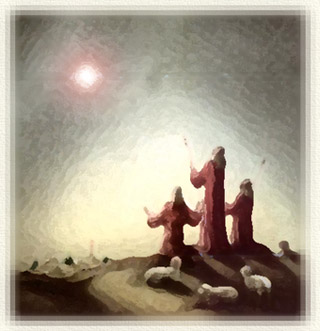
This translation is somewhat misleading because it implies that the angel was announcing God’s good will toward humanity at large. To some extent this is true. As shown in Luke 2:10 Christ’s birth was good news for all. The verse has the angel telling the shepherds not to be
afraid because behold, I bring you good news of great joy which will be for all the people.
However, the angels’ pronouncement in verse 14 is slightly different. The Greek noun eudokias is more accurately translated in the NASB "Glory to God in the highest, And on earth peace among men with whom He is pleased ." (Luke 2:14 NASB)
While Jesus’ birth was good news for everyone, God’s good will is only toward those with whom He is pleased. Sent by the Father, Jesus Christ saved us from the death penalty by dying in our place, offering all those who choose to put their trust in and follow Him safety from the wrath of God Himself. In His Grace (defined as unmerited favor), gave His Son's life so that we don’t have to pay the ultimate price for our sins. This is the good news” the angels proclaimed at Christ’s birth, and this is the gospel we are called to proclaim to others in our day. See The Message of The Bible and Salvation] |