ALSO SEE Thou Shalt Not Kill: Does God Violate His Own Commandment? (BELOW)
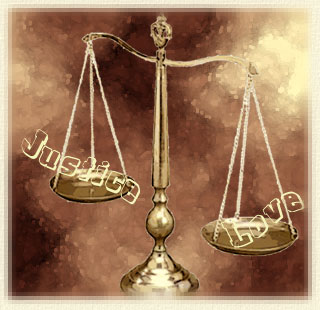
Why is it moral for God to kill innocent human beings when it is immoral for us? Joshua’s Conquest: Was it Justified? Why Did God Allow The Killing Of All The First Born Of Egypt? I want to tell you about a conversation I had a few days ago with someone I chatted with on the phone about a question that came up in light of my earlier teaching and discussion on the issue of morality. My arguments last weekend as I taught, and I've spoken of many times on this show, and a little bit even yesterday about morality is that there are absolutes that relate to every human being and the absolutes come forth from the character of God. It doesn't matter what time you are in, or what culture you are in, or what circumstance you are in, these absolutes still apply to everyone who is in a morally or a relevantly similar circumstance. So there is a universalizable aspect to moral absolutes. They are applied universally.
How is it that God could allow the annihilation of thousands and thousands of people, whether that annihilation was through war or natural disaster? In fact, how is it that God could even command such a thing in the Old Testament if it is immoral to take the life of an innocent human being?
The question was, "If morality was absolute, such that it doesn't change with time, circumstances or belief, and part of the absolute morality is that we ought not take the life of innocent human beings, especially innocent children --then how do I justify God taking the lives of innocent children at the original Passover when the angel of death came through and killed the first born in every family?" I have had a way of responding to that in the past, but as I was talking a new angle to this occurred to me, and it really helped me to understand the issue better so I want to pass it on to you. This question, by the way, is not just an isolated, highly focused question about the Passover. It's really a much broader question stated in a different fashion. The broader question is asked much more frequently, "How is it that God could allow the annihilation of thousands and thousands of people, whether that annihilation was through war or natural disaster? In fact, how is it that God could even command such a thing in the Old Testament if it is immoral to take the life of an innocent human being? How does it suddenly become moral because God Himself commands such a thing?" In answering this question, we have to be careful of what is called Euthyphro's Dilemma and the dilemma is: Is morality something that is above God, that God must conform to, or is morality something that is merely the whim of God, such that God can choose to do anything He wants and it's still called moral?
In the first case, it would mean that there is a law above God that He is subordinate to, which mean He would be less than God. In the second case, if morality is merely that which God says is right and wrong, then it seems that moral things are merely arbitrary and God could change His moral viewpoint at His whim, and this would then reduce His morality to His power. God has the power to enforce whatever He wants, therefore whatever He wants happens to be the moral thing at that time. Killing innocent children is immoral now, but tomorrow He might change His mind. And because He is God, after all, He can make that a moral thing, at least for Him. So there is the dilemma because it seems like you lose both ways. I think my answer to the woman who called me avoids the dilemma, and I think it's a fair response, but you have to think about it for a moment because it may seem like I'm trying to slip out of the problem. My answer is simply this: How is it that God can allow the taking of life of innocent people? The answer is that God, being the Author of life, has the absolute right to take life away whenever He wants to. Simply put, He gives life, He takes it away. Life is His to do with what He wants. He can give it, as the Author, and as the Author, He can take it away again. ...there is nothing patently immoral about the Creator of life taking away life. It's immoral for us because when we take life, usually we are exercising a prerogative reserved for God alone. For example, if you have a vacation day you can spend it at the beach, or you can spend it playing sports, or you can spend it just staring at the wall. If you choose to stare at the wall on you vacation day, you have no need to justify the action to someone else who thinks that staring at the wall is a foolish waste of time. They say, "Well, why are you staring at the wall? You shouldn't do that. You should do otherwise." Your response to them is, "Listen, it's my vacation, it's my time and it's my wall." That's it. You don't need to justify your actions when the execution of those actions are entirely and properly your prerogative, as it would be in how you use your vacation time. In the same way, life is God's possession so God may do with life as He pleases. Now it may sound like I'm simply reducing God's morality to His power. He can do what He wants because He is God. That's not what I am saying because I don't think taking innocent life is patently, on the face of it, immoral. It is immoral when it is done by certain people, and not immoral when it is done by others - or Another. I am merely stating that there are certain things which are clearly God's prerogative. Can God create something and then destroy what He's created? Yes, He can do as He wishes, though His wishes are constrained by His character so He can't wish something that is immoral or inconsistent with His character. And there is nothing patently immoral about the Creator of life taking away life. It's immoral for us because when we take life, usually we are exercising a prerogative reserved for God alone. There are a few circumstances where He delegates that power to us, specifically in my view, capital punishment. We know this intuitively, folks, because when men seek to make life and death decisions for others, what do we tell them? We say, "It's not right for you to 'play God.'" Well, of course it's not right for man to play God, but it implies that it is right for God to play God , and that's my point. My point is simply this: we intuitively know that man and God have different prerogatives. It is inappropriate for men to take innocent life simply because we are robbing other human beings of a God-given gift and we are not to play God in that regard. But clearly God can play God. It is His role and He is not robbing when He takes away what He has given in the first place. It is something that is under His appropriate control. He can take a life anytime He wants. Taking innocent human life is wrong for us, because taking life is God's prerogative, not ours, which means it is appropriate for Him to do it, not us, and He can dispense and retract life whenever He pleases. Part of the problem here is that we want to hold God to the same standard of morality He holds us to, as if the standard is above us both and man and God are on equal terms when it comes to behavior. Whatever we can't do, God shouldn't be allowed to do either. But every parent knows that such an arrangement is just plain false. Parents aren't constrained by the same standards that their children are constrained by, and in the same way God has a different set of prerogatives as well. Life and death is one of His, not one of ours, and that's why it is appropriate for Him to make His sovereign decisions with regards to the disposition of life and death. We are not to do so, and that's the long and short of it. Thou Shalt Not Kill: Does God Violate His Own Commandment?
by Rich Deem Introduction: The sixth commandment is "Thou shall not kill." Atheists claim that God violated His own commandment in ordering the destruction of entire cities, just to allow the Jews to have a homeland in the Middle East. The Bible confirms that God ordered the killing of thousands of people. Isn't this an open and shut case for the hypocrisy of the God of the Bible? Is all killing the same?
One thing you have to love about atheists is their extreme appreciation for the King James Version (KJV) translation. The KJV was translated in the early 17th century using an archaic form of modern English. In the last 400 years, English has changed significantly. Unfortunately, the vast majority those who read the KJV (both believers and unbelievers) are unqualified to know what the text means in many instances because of word meaning changes. In attempting to demonstrate the contradiction of God's commands to Israel and the sixth commandment, atheist cite the KJV translation, "Thou shalt not kill." However, like English, Hebrew, the language in which most of the Old Testament was written, uses different words for intentional vs. unintentional killing. The verse translated "Thou shalt not kill" in the KJV translation, is translated "You shall not murder" in modern translations - because these translations represents the real meaning of the Hebrew text. The Bible in Basic English translates the phrase, "Do not put anyone to death without cause." The Hebrew word used here is ratsach, which nearly always refers to intentional killing without cause (unless indicated otherwise by context). Hebrew law recognized accidental killing as not punishable. In fact, specific cities were designated as "cities of refuge," so that an unintentional killer could flee to escape retribution (Numbers 35:11). The Hebrew word for "kill" in this instance is not ratsach, but nakah, which can refer to either premeditated or unintentional killing, depending upon context. Other Hebrew words also can refer to killing The punishment for murder was the death sentence. However, to be convicted, there needed to be at least two eyewitnesses. "On the evidence of two witnesses or three witnesses, he who is to die shall be put to death; he shall not be put to death on the evidence of one witness. (Deuteronomy 17:6) "A single witness shall not rise up against a man on account of any iniquity or any sin which he has committed; on the evidence of two or three witnesses a matter shall be confirmed. (Deuteronomy 19:15)
Is God's killing justified?
To answer the question whether God breaks His own commandments, we need to determine if God committed murder (i.e., killed people without cause). The Bible is quite clear that God has killed people directly (the most prominent example being the flood) and indirectly (ordered peoples to be killed). If God ordered or participated in the killing of innocent people, then He would be guilty of murder. Let's look at two of the most prominent examples.
The Flood
According to the Bible, God killed every human except Noah, his wife, his sons, and their wives in the flood. Were any of these people killed unjustly? The Bible says specifically that all people (except Noah and his family) had become corrupted. Not only had all people become corrupted, but they were continually plotting evil!
Then the Lord saw that the wickedness of man was great on the earth, and that every intent of the thoughts of his heart was only evil continually. (Genesis 6:5) Now the earth was corrupt in the sight of God, and the earth was filled with violence. God looked on the earth, and behold, it was corrupt; for all flesh had corrupted their way upon the earth. (Genesis 6:11-12)
Is it possible that an entire culture can become corrupted? You bet! Recent history proves the point rather well. When the Nazis took over Germany before WWII, opposition was crushed and removed. When they began their purging of the undesirables (e.g., the Jews), virtually the entire society went along with the plan. So, the Bible indicates that no innocent people were killed in the flood. [See Noah, The ONLY Righteous Person? for those that think it extremely odd that Noah and his family were the only righteous people on earth]
God Orders Killing
What about when God ordered Joshua and his people to kill every man, woman and child in Canaan? What crime could be so great that entire populations of cities were designated for destruction? God told Moses that the nations that the Hebrew were replacing were wicked. How "wicked" were these people? The text tells us that they were burning their own sons and daughters in sacrifices to their gods. So we see that these people were not really innocent. For these reasons and others (last quote below), God ordered the destruction of the peoples whom the Israelites dispossessed.
"It is not for your righteousness or for the uprightness of your heart that you are going to possess their land, but it is because of the wickedness of these nations that the Lord your God is driving them out before you, in order to confirm the oath which the LORD swore to your fathers, to Abraham, Isaac and Jacob. (Deuteronomy 9:5) "You shall not behave thus toward the Lord your God, for every abominable act which the Lord hates they have done for their gods; for they even burn their sons and daughters in the fire to their gods. (Deuteronomy 12:31) And the Avvites made Nibhaz and Tartak; and the Sepharvites burned their children in the fire to Adrammelech and Anammelech the gods of Sepharvaim. (2 Kings 17:31) "When the Lord your God cuts off before you the nations which you are going in to dispossess, and you dispossess them and dwell in their land, beware that you are not ensnared to follow them, after they are destroyed before you, and that you do not inquire after their gods, saying, 'How do these nations serve their gods, that I also may do likewise?' (Deuteronomy 12:29-30)
What about the children and other "innocents"
Surely God could have spared the children! People tend to assume that children are innocent, even if their parents are doing bad things. The assumption is unfounded. For example, Palestinian Muslim children are officially taught in grammar school to hate their Jewish neighbors. They are so well indoctrinated that some of them give up their lives in suicide bombings as children. Corruption literally does breed corruption, which is why God did not want the Hebrews tainted by the other corrupt cultures of the Middle East.
InPlainSite.org Note: Many believe that the Bible gives absolutely no explanation for the extermination of young children which, if true, would leave the critics justified in believing that these actions were morally reprehensible and that the Jews, their religion and their God were no better than every one else. And if no explanation is provided we, as Christians, are left with little choice but to poke around and come up with some logical reasons this should have happened. However perhaps the Bible is not quite as silent on the topic as some think. Perhaps with a little digging we will unearth the underlying reason that all these people had to be exterminated, and was the right thing to do.
[See Joshua’s Conquest: Was it Justified?]
Surely there must have been other innocent adults in those cities who were destroyed with the wicked! There actually is an example of a time when God was asked if He would destroy the innocent along with the wicked. Prior to destroying Sodom and Gomorrah, Abraham asked God if He would destroy the righteous along with the wicked. God replied that He would spare the entire city for 50 righteous people. Abraham kept reducing the possible number of righteous people, asking God if He would destroy the entire city along with those number of righteous people. God's reply in each case was that He would not destroy the righteous along with the wicked. The lowest number Abraham asked about was ten righteous people, although the answer would likely be the same with as few as one righteous individual. How do we know this? God sent two angels to warn the four righteous people in Sodom to flee before He destroyed the city. It is quite convenient that such details are usually left out of atheistic sites complaining about the "evil" perpetrated by God. In fact, God saved certain people from being killed in cities such as Jericho. (See Genesis 18)
Conclusion
The commandment "Thou shalt not kill" is really not as general as the King James version would indicate. The commandment actually refers to premeditated, unjustified killing - murder. Although God ordered the extermination of entire cities, He did so in righteous judgment on a people whose corruption had led to extreme wickedness, including child sacrifice. Did God destroy the righteous along with the wicked? In an exchange with Abraham, God indicated that He would spare the wicked to save the righteous. He demonstrated this principle by saving righteous people from Sodom and Jericho prior to their destruction. The charge that God indiscriminately murdered people does not hold to to critical evaluation of the biblical texts. |